Over the last two years we've spoken to 7,000 people in 5 markets about the role of business in the world today. Last year they told us they want fundamental change, and they want businesses to drive it ‐ ahead of governments, charities and activists.
This year, in Radical Everything, that feeling continues. Only 6% of people think businesses should carry on with existing methods. Everyone else, regardless of age, seniority and geography, believes they should challenge convention and create new ways of doing things. But how, exactly, can businesses do this?
Let us know what you think.
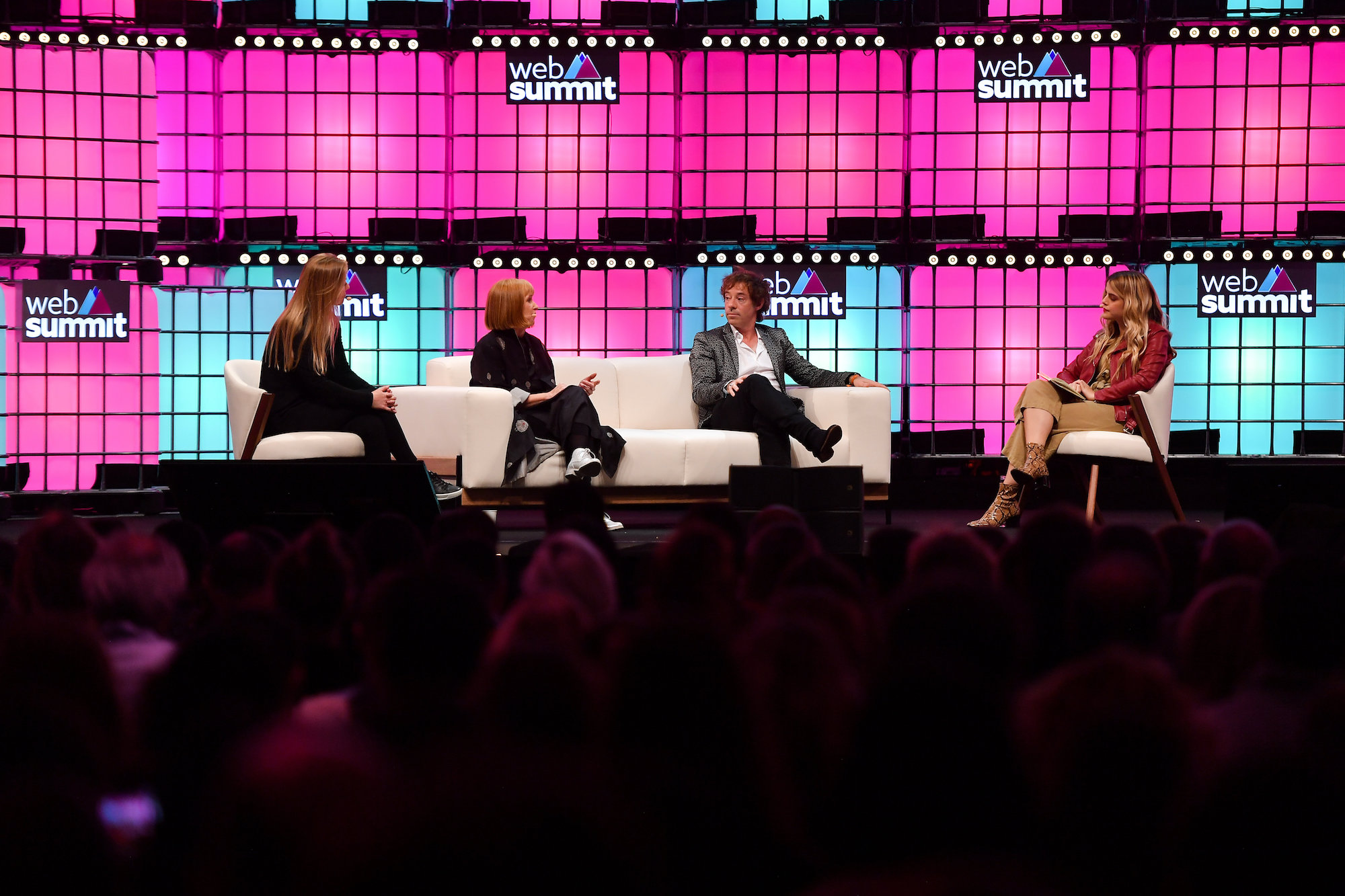
Back in November Wolff Olins were in Lisbon at Web Summit, touted by Forbes as ‘the best technology conference on the planet’. It’s certainly one of the biggest too, attended by 70,000 people. The audience is a lively mix of policy-makers, business leaders, startup founders, media and investors – all essentially asking, ‘what next?’ With such a bunch of progressive thinkers and practitioners in one place, the vibe’s magnetic. Set over four days and tens of stages, it’s impossible to summarise the content in full but overall, there were broad themes.
Better world Tim Berners Lee, inventor of the internet, opened the event by launching a campaign to protect people’s rights and freedoms online. He told the Guardian afterwards, “For many years there was a feeling that the wonderful things on the web were going to dominate…But people have become disillusioned.” He wants his initiative, which he called a “Magna Carta for the web” (and which Google and Facebook have already supported), to hold the powerful to account so that people everywhere can be online “freely, safely and without fear.”
Next up, Senior Vice President at Apple, Lisa Jackson, focused on business practices that protect the environment. She argued that a healthy planet doesn’t have to negatively affect a company’s commercial performance. This notion of tech for social good was the order of the day for the duration of the conference, obviously partly as a result of the recent Silicon Valley backlash and various, data-related scandals. From Michael Acton Smith and Alex Tew explaining how their popular app, Calm, has improved users’ mental health by reducing stress, to Samsung’s President Young Sohn pushing for a principle-driven approach to business development, positive impact was much further up the agenda than fat bottom lines.
Better together In 2017, there was lots of talk about how artificial intelligence and machine learning, fed by growing data sets, were set to have a drastic impact on existing processes. This year there was evidence of this in practice. Methods were both shared and up for debate.
A few examples: Cassian Harrison and George Wright of the BBC showed how they’d successfully created an AI that created two nights of programming for BBC Four. Graham McDonnell of the New York Times unpacked the publisher’s ‘persuasive design’ techniques in some detail. Hannah Allen of Babylon Health and Roy Smythe, Chief Medical Officer at Philips, demonstrated how their companies are using AI to revolutionize healthcare on a global scale.
Businesses revealed the ways they were not only employing but pushing technology. Though this sector had a reputation for being hyper-competitive, the transparency in this environment – and the collaborative spirit underpinning it – were striking.
Better brands There were lots of speakers from the worlds of marketing, branding, content creation and advertising. Our CEO, Sairah, talked to a thousand-strong audience about ‘designing the brands of 2050’ on the Creatiff stage on Tuesday (watch in full here). She looked at brands as physical spaces, as humanised operating systems, and as entire ideologies, taking cues from current examples from Apple, Aesop, Amazon, Patagonia, Alphabet, and Airbnb. We were thrilled to find out that this presentation was one of the event’s most liked!
She then took part in a number of sessions about tech’s impact on both creativity and the creative sector. In Wednesday’s panel with Susan Credle, Chief Creative Officer of FCB Global, a Buzzfeed journalist asked whether brands would even exist in future. I saw this question crop up in a few places and speakers offered a similar response – namely that brands aren’t needed for commodities, but lots of products and services aren’t actually commoditised.
For as long as people care about where they come from or how they’re done – in other words, for as long as people have an emotional connection to what they’re consuming – brands will thrive. Most importantly, they’re getting smarter, more interactive and more nuanced thanks to the way tech’s bringing the people driving them closer to consumer desires. Michelle Peluso from IBM told the audience how her teams now work ‘in agile’ and have ‘daily stand ups’, and Ian Wilson of Heineken described how their brand is evolving to meet customers on their mobiles first, thanks to a comprehensive grasp of data. For agency folk and clients alike, it feels like brand building is fast becoming a rather precise science.
All in all, Web Summit was nothing short of phenomenal and left me feeling optimistic about the potential in this community. We’re already looking forward to 2019’s event.
Fertility is an essential part of our health, but still a black box for many. Two former Uber and 23andMe execs set about building a company to change that. We created a brand that would set a new standard in personal health and make fertility simple and accessible for all. After generating $70,000 in orders at launch, it’s since secured $6 million in funding.
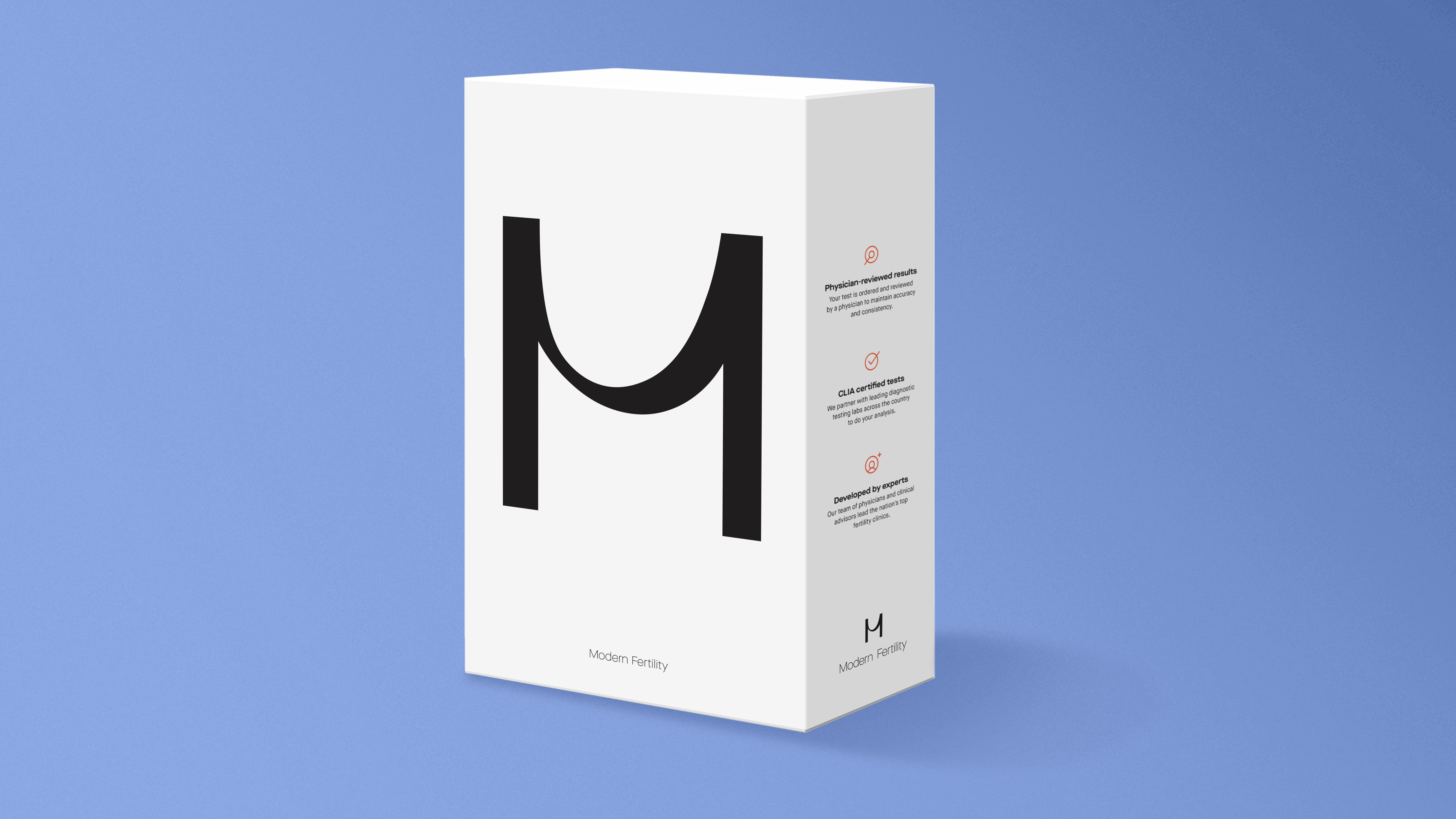
Driven by the conviction that having more information about their fertility gives people greater control and more options, Modern Fertility founders Afton and Carly built a direct-to-consumer at-home test. It’s the same one offered in many fertility clinics, but it comes at a fraction of the cost and results are easy for anyone to understand.
A path to growth As part of the growing femtech and personalized medicine sector, Modern Fertility wanted to signal a fundamental shift in democratizing health information, as opposed to just delivering tech-enabled convenience.
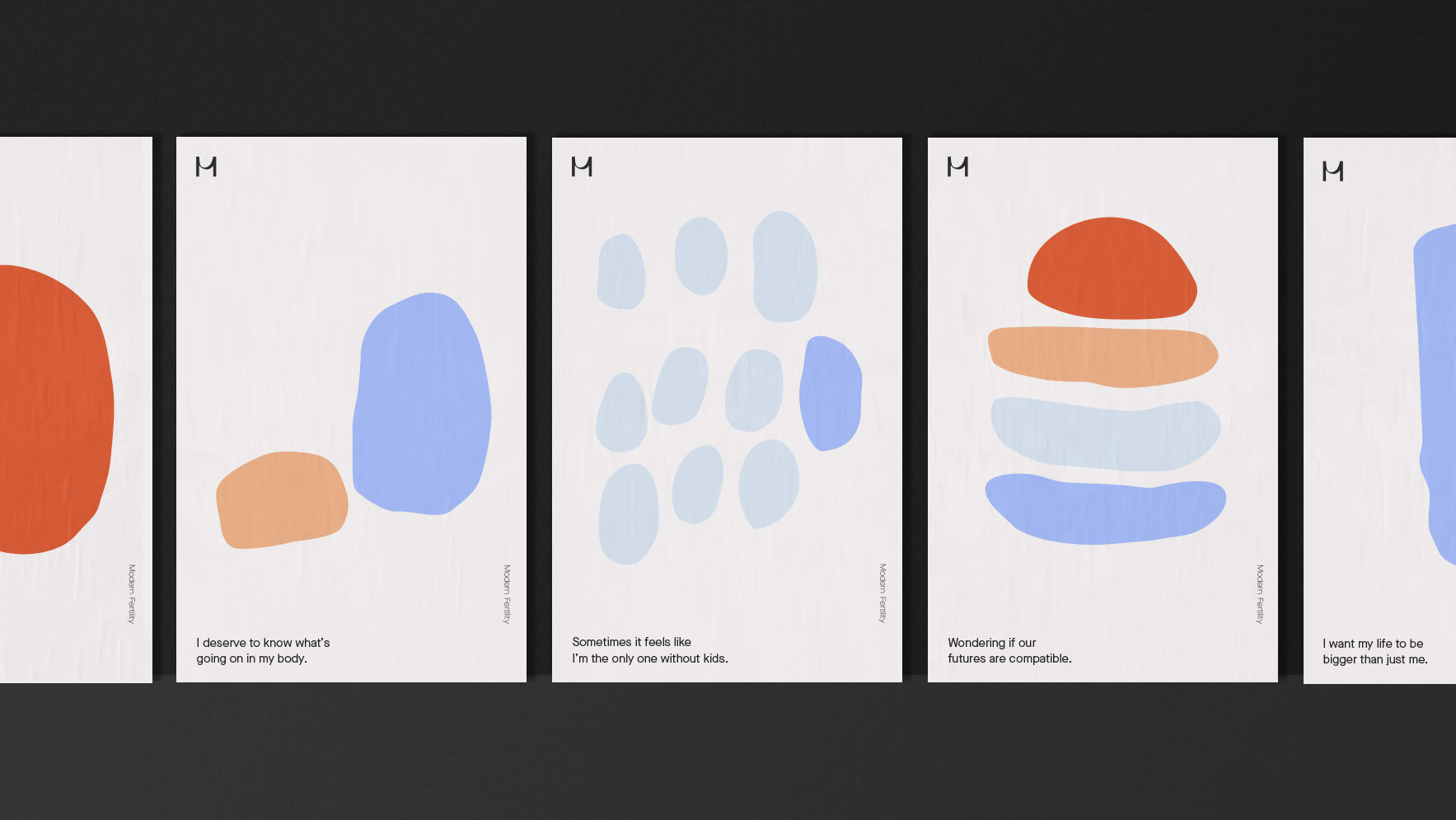
This required breaking taboos around the topic, reframing fertility as an integral part of overall health, and transforming it into something proactive rather than reactive. It meant humanizing the overly clinical impersonal aesthetic that dominates healthcare.
Open to everyone The brand needed to feel inclusive for a broad range of users and circumstances: women wanting to preserve their options, but not yet ready to have children, same sex-partners making decisions about fertility treatment, and couples struggling to conceive. It had to exist as an intimate community, open to everyone.
The visual language is an intentional departure from healthcare’s dated graphic devices. The ‘M’ mark is hand-drawn – calligraphic rather than mechanical – to convey trust and invite exploration. A fluid ‘u’ is buttressed by strong vertical lines to emphasize a focus on the individual, and reinforce Modern Fertility’s role in supporting people through their fertility journey.
Scaling a startup Modern Fertility initially secured $1 million in funding from famed venture capitals firms First Round Capital, Box Group and Y Combinator. It saw $70,000 in orders at the initial brand launch and received extensive press coverage including in TechCrunch, VentureBeat, and Refinery29. It’s announced an additional $6 million in funding, as reported in Fast Company and Forbes. We’re excited to see what’s to come!
Let us know what you think.
A couple of weeks ago Robert, our Head of New Thinking, asked people here which podcasts they listen to, on business and brand. He was putting a list together for students taking the MSc in Brand Leadership, which he teaches at the University of East Anglia. It became a particularly lively email thread, so we thought we’d share our recommendations here.
a16z
“Andreessen Horowitz’ podcast is a treasure trove of briefings, histories and forecasts about most of the trends our clients come to us to navigate. Whenever I kick off a project or a pitch, I always run a search for what this podcast has had to say on the topic.” (Zami)
Dear HBR:
“Every episode explores how to deal with a different workplace challenge. It’s super insightful for anyone learning to lead (or struggling to be led), and a great guide for students starting out as well as consultants trying to design better cultures.” (Zami)
How I Built This
“Guy Raz from NPR interviews everyone from Howard Schultz to Ben & Jerry about how they started and built their businesses and brands. They talk about what worked, what didn’t, what it cost them and what they learnt. It’s human, considered and revealing.” (Amy)
Masters of Scale
“The true stories can be a good antidote to naive misconceptions about disruption and hyper growth.” (Charles)
What it Means: A Forrester podcast
“Essential listening for anyone interested in customer experience.” (Colin)
Under the Skin with Russell Brand
“The more recent episodes, especially, are perception-shifting conversations with leading thinkers on power, truth and making positive change.” (Paddy)
IDEO Futures
“This has some interesting ideas about deign in business. I’ve recently been enjoying #42 on the wisdom of Peter Drucker.” (Paddy)
Esther Perel’s ‘Where Should We Begin?’
“She’s a Belgian psychotherapist, known for exploring the tension between the need for security and the need for freedom in human relationships. This podcast is a series of one-off counselling sessions with couples of all shapes and sizes. Fascinating.” (Jem)
The High Low
“Hosted by British journalists, Dolly Alderton and Pandora Sykes, it’s basically a heap of content recommendations drawn from popular culture – from the trivial to the political – analyzed in a refreshing way and linked to the zeitgeist.” (Jem)
On Being with Krista Tippett
"This tackles the enduring questions that gave rise to our spiritual traditions and resonate across centuries: what does it mean to be human, how do we want to live, and who will we be to each other? For anyone with doubt.” (Jem)
The Bottom Line with Evan Davies
“It’s really grounded and easy to listen to. The researchers delve into the mundane to find stories in the everyday, avoiding sensationalism.” (Charlie)
The Bottom Line with Rick Wartzman
“This covers nice world stories that are grounded in a social perspective.” (Charlie)
WorkLife with Adam Grant
“This is a great insight into social psychology and work. It’s excellent for anyone who works, and especially for those looking to make work better.” (Katie)
Data Skeptic
“This does a solid job of explaining why data isn’t always the silver bullet for every business problem, why recommendation systems are hard, why engagement is nonsense and why it’s easy to mess up time-series analysis.” (David)
Desert Island Discs
“It’s just a classic.” (Bianca)
Tell us what you are listening to.